Solo
For a practitioner adding R&D to a small book
5 studies included · $1,200 per included study
- Additional studies $1,500
- 2 practitioner seats
- Client portal and §7216 consent flow
- Section G builder and checker
- Federal and every applicable state
Your clients ask about the R&D credit, and you send them to a specialist firm that takes the fee and sometimes the client. With TaxVantage, agents build the study from your client’s records and you sign it, for one annual license and no share of your fee.
You know your team’s work likely qualifies for the R&D credit, but the paperwork, and now Section G, keeps putting you off. Occams Advisory’s licensed tax professionals prepare your study with AI agents and sign it, for $2,500 to start plus 18% of the credit you receive.
Licenses from $6,000 a year. Founding pricing: 25% off year one for the first 10 firms.
Nothing is billed until you approve the engagement.
A U.S. advisory firm for founders and business owners.
10 timesFastest-growing private companies in America, 10 times since 2016
6 timesThe Americas’ Fastest-Growing Companies, 6 times since 2020
2023 and 2026America’s Most Innovative Companies, 2023 and 2026
The latest figures from U.S. government sources.
The credit is getting harder to document, clients are paying outsiders to do it, and the work fits naturally next to the return you already prepare.
Above $1.5 million of qualified research expenses or $50 million of gross receipts, the business components behind at least 80% of the claim must be listed on the return, with their costs. Detail that used to wait for an examination now goes in at filing.
IRS news release IR-2025-99; Form 6765 instructions, February 2026.
Specialty credit firms commonly take a fifth or more of the credit on contingency, and some take 40%. With TaxVantage that work stays inside your firm, priced as you decide.
Published fees: 20% at the low end; 25 to 40% according to Swanson Reed’s fee guide (April 2026).
Each state applies its own base, limits and carryforward rules. The platform calculates every applicable state from the same federal allocation.
Aprio, August 2025. State rules change; confirm each state for the year.
The R&D tax credit pays back part of what your company spends developing or improving software, products and processes. Enter last year’s spend for a rough number, then see exactly what you would pay us.
A rough range: the federal credit is usually about 6 to 8% of this spend. State credits are extra. Your study sets the real number. Nothing is billed until you approve the engagement.
$2,500 to start, plus 18% of the credit you receive. On a $100,000 credit, you pay $20,500 in total.
A licensed tax professional at Occams Advisory.
As a lower income tax bill on the return that claims it. Companies with under $5 million in revenue, and no more than five years of revenue, can instead use up to $500,000 a year against payroll taxes, starting the quarter after they file.
The file that backs up your claim: which projects qualify, whose time and which costs count, and your Section G schedule. Your CPA files it with your return on Form 6765.
Exports from your payroll, accounting and project tools. No long interviews.
We help you answer them for any study we prepare.
Each agent has a narrow job, works from source records rather than surveys, and hands anything that needs professional judgment to your reviewera licensed tax professional, with the evidence attached.
Reads payroll, ledger, time and project exports in whatever form the client has, and normalizes them into one dataset.
Proposes business components from tickets, repositories, specifications and project codes, and links people to the work they did.
Tests each component against the four-part test and records the uncertainty, the process of experimentation and the evidence for each.
Splits wages across direct research, supervision and support, maps supplies and cloud costs, and applies the 65% limit to contract research.
Builds the business component table line by line, checks the 80% coverage rule and the 50-component cap, and keeps it in step with the calculation.
Drafts technical narratives for each component and links every figure in the study to the record it came from.
Checks the whole package for internal consistency, prior-year variances and common examination triggers before it reaches the professional.
Your professional decides every flagged item, chooses the elections and signs the study. Nothing is final without their approval.A licensed tax professional at Occams Advisory decides every flagged item, chooses the elections and signs your study. Nothing is final without their approval.
The line between software and professional judgment is drawn deliberately, and it never moves.
TaxVantage never prepares or signs a tax return. Every study is reviewed and signed by the licensed practitioner who holds the engagement.
Five steps from setup to a signed study. The agents do the assembly; your professional makes every call that needs judgment.Five steps from a first call to a signed study. The agents do the assembly; a licensed tax professional makes every call that needs judgment.
We walk through the platform with your team and set up your firm’s license. Setup is planned for week one, training for week two and your first live client for weeks two to four.
Your client gives the §7216 consent the rules require, then you or they upload exports from payroll, accounting and project tools. No templates to fill in.
The agents build a complete first draft once the data is in, and send open questions to your reviewer with the evidence attached.
Your professional decides each flagged item from the records behind it, then signs the study. Your client approves the final numbers.
Your firm files Form 6765 with the return. If the IRS asks questions, the evidence is already organized by project.
A short call confirms whether your work is likely to qualify. Nothing is billed until you approve the engagement.
You give the §7216 consent the rules require, then upload exports from payroll, accounting and project tools. No templates to fill in.
The agents build a complete first draft once the data is in, and send open questions to your tax professional or to you.
An Occams Advisory tax professional decides each flagged item from the records behind it, then signs the study. You approve the final numbers.
Your CPA files Form 6765 with your return. If the IRS asks questions, the evidence is already organized by project.
We walk your team through a sample study, the review queue and Section G.
Get a rough range in a minute, then start your study. Nothing is billed until you approve the engagement.
At the Firm and White-Label Enterprise tiers, every deliverable, portal screen and client email carries your name. Type yours to see the study cover.
On the call, we run a sample study under your firm’s name.
Upload your 2026 R&D records
We are preparing your research credit study. Use our secure portal to give consent and upload your exports.
Open the secure portalFrom 2026 tax years, most companies claiming the credit must list each research project (the IRS calls them business components) and its costs in Section G of Form 6765. TaxVantage builds it as part of every study. Check whether it applies.
Reported business components must account for at least 80 percent of total qualified research expenses.
Reporting is capped at 50 business components, starting from the largest.
Wages are reported by component and split across direct research, supervision and support.
The first filing season it is required, for 2026 returns.
Sources: IRS news release IR-2025-99 (October 2025) and the Form 6765 instructions (February 2026).
Qualified research expenses are at or below $1.5 million and gross receipts at or below $50 million on an original return. Completing it anyway can strengthen the file.
Most firms do one of the first three today. Here is how they compare on the things a practice owner cares about.
| Question | Refer to a specialist | Build it in spreadsheets | Per-company software | TaxVantage license |
|---|---|---|---|---|
| Who owns the client | Shared, often lost | You | Often the software vendor | You |
| Who keeps the fee | The specialist, with a referral share to you | You | The vendor charges the client directly | You, in full |
| Cost basis | Commonly 20 to 40% of the credit | Staff hours | Per company, per year | One annual license for the firm |
| Section G handling | The specialist’s process | Manual and time-consuming | Varies | Built and checked automatically |
| Your brand on deliverables | No | Yes | No | Yes, from the Firm tier |
| Who signs | You, on someone else’s work | You | Varies | You, on work you reviewed line by line |
Priced on how many studies your firm runs, never on the size of your clients’ credits, and we take no share of your fee. A study is one entity for one tax year: federal, every applicable state and Section G. Entities with more than 250 employees carrying QREs count as two studies.
25% off year one and the same price in year two, plus your first live study reviewed by a specialist at no charge, in return for a published case study. Open to the first 10 firms for three months from launch.
Book a partner callFor a practitioner adding R&D to a small book
5 studies included · $1,200 per included study
For firms with a handful of R&D clients
20 studies included · $900 per included study
For firms building a credits practice
60 studies included · $700 per included study
For platforms, PE-backed groups and credit specialists
200 studies included · $500 per included study
| Feature | Solo | Practice | Firm | Enterprise |
|---|---|---|---|---|
| Annual license | $6,000 | $18,000 | $42,000 | $100,000 |
| Studies included | 5 | 20 | 60 | 200 |
| Additional studies | $1,500 | $1,100 | $850 | $600 |
| Practitioner seats | 2 | 5 | 15 | Unlimited |
| Deliverables carry | TaxVantage branding | Your firm and TaxVantage | Your firm’s brand | Your brand only, on your domain |
| Client portal and §7216 consent | Included | Included | Included | Included |
| Section G builder and checker | Included | Included | Included | Included |
| State credit calculations | Included | Included | Included | Included |
| Specialist second review | $750 per study | $750 per study | 5 included, then $750 | 20 included, then $600 |
| Multi-office administration | No | No | No | Yes |
| Single sign-on | No | No | Yes | Yes |
| API access | No | No | No | Yes |
| Onboarding | Self-serve | Guided setup | Guided setup and team training | Named partner lead |
A TaxVantage tax specialist reviews the study before you sign. Advisory only; the decisions remain yours.
Help assembling responses to IRS information requests, working alongside the practitioner of record.
Unlimited screenings and preliminary credit estimates for prospects, on every tier and for non-licensees.
Unused studies roll forward for twelve months, so a slow season never costs you capacity.
Upgrade at any time. The unused portion of your current license is credited toward the new tier.
Enter your volume and the fee you charge. The calculator picks the lowest-cost tier.
Your fee is your decision and your engagement. Use what you charge now or plan to.
Excludes optional specialist reviews. Discounts apply to the license and additional studies.
Book a call about PracticeThe onboarding plan for founding partners, built so your first R&D client is on the platform before busy season.
Seats created, branding applied, consent language reviewed against your engagement letter.
A working session on the review queue, elections and Section G, using an anonymized sample file.
Your first engagement runs with a TaxVantage specialist alongside, at no charge for the review.
Run the Section G checker and estimates across your existing clients to find the R&D work already there.
You are trusting us with payroll and tax information. This is how the platform handles it.
The portal captures the §7216 consent the rules require before any return information is shared.
A client’s data is used only to prepare that client’s study and is never used to train shared models.
Access is role-based, and the platform records who opened which record and when.
Data is encrypted in transit and at rest, and exports leave the platform only on the practitioner’s instruction.
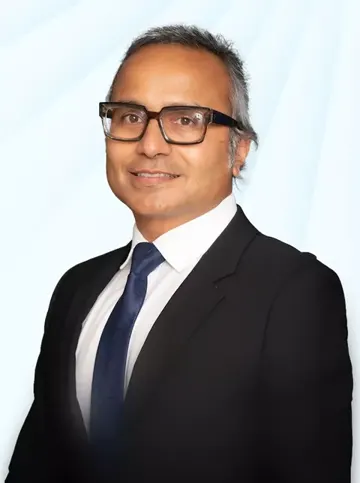
Founded by the team behind Occams Advisory, with tax, technology and finance leadership held to one standard of review.
Founded Occams Advisory after a Wall Street career at Barclays, Bank of America Merrill Lynch and The Bank of Nova Scotia. MBA, NYU Stern.
LinkedIn profile for Anupam Satyasheel
Serial founder and the architect of the platform and its agents. Built Occams’ Equipay platform; founded and scaled 247 Experts. B.Tech, IIIT Allahabad; AGMP, IIM Ahmedabad.
LinkedIn profile for Nitin Aggarwal
Leads reporting, compliance and cross-border structuring. Fellow of the Institute of Chartered Accountants of India, with more than a decade in financial reporting, taxation and audit.
LinkedIn profile for Rajat Garg
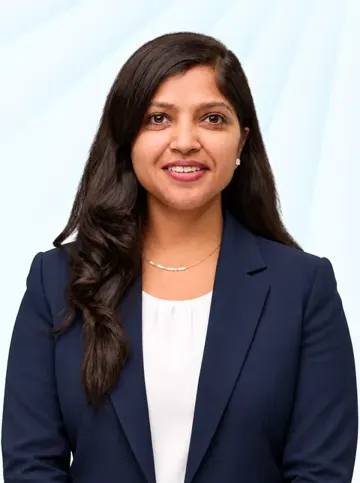
Owns the tax method and the review standard every study on the platform is built to meet. Chartered Accountant in India who passed the U.S. CPA exam; in tax and audit since 2004.
LinkedIn profile for Priyanka BathwalIf yours isn’t here, call +1 443-720-2000.
We walk your team through a sample study and the review queue.
Book a partner callGet a rough range in a minute, then start your study. Nothing is billed until you approve the engagement.
Estimate your creditYou do. The agents build the study, the Section G detail and the Form 6765 workpapers, and send every judgment call to your reviewer. Your firm decides each flagged item and signs. The software never signs anything.
No. Your firm pays one annual license, and the fee you charge your client is your decision. TaxVantage takes no share of it.
There are four annual licenses, paid upfront: Solo at $6,000 with 5 studies included, Practice at $18,000 with 20, Firm at $42,000 with 60, and Enterprise at $100,000 with 200. Additional studies cost $1,500, $1,100, $850 and $600 respectively. Prepaying two years takes 10% off both years. The first 10 founding partner firms get 25% off year one and the same price in year two.
Each study covers one entity for one tax year: the federal calculation, every applicable state, the Section G schedule, technical narratives, the evidence index and the workpapers that support Form 6765. Seats, branding, specialist reviews and onboarding scale by tier, from 2 seats on Solo to unlimited seats on Enterprise. Compare plans.
The portal captures the §7216 consent the rules require before any return information is shared. A client’s data is used only to prepare that client’s study, is never used to train shared models, and is encrypted in transit and at rest.
The federal research credit (Section 41 of the tax code) rewards U.S. companies for work that develops or improves a product, process or software, relies on engineering or science, and involves trying alternatives to solve a technical problem. Pay for the people doing that work, supplies, cloud computing used for it and 65% of contractor costs count toward the credit, which is claimed on Form 6765 with the tax return.
The federal credit is usually about 6 to 8% of what a company spends on qualifying research, depending on how that spending has grown, and many states add their own credit. Companies with under $5 million in revenue and no more than five years of revenue can use up to $500,000 a year of the federal credit against payroll taxes, so it also helps companies that are not yet profitable.
$2,500 to start, plus 18% of the credit you receive. On a $100,000 credit you pay $20,500 in total. Occams Advisory’s licensed tax professionals prepare and sign the study.
The file that backs up your claim. It shows which projects pass the IRS four-part test, whose time and which costs count, and the Section G schedule, with every figure linked to the record it came from. Your CPA uses it to complete Form 6765 with your return.
AI agents gather your records, match them to projects and draft the study. A licensed tax professional at Occams Advisory decides every judgment call and signs it. The software never signs anything.
As a lower federal income tax bill on the return that claims the credit. Companies with under $5 million in gross receipts, and no gross receipts before the last five years, can instead elect to use up to $500,000 a year against payroll taxes, starting with the first quarter after they file that return.
Generally you can amend returns for tax years that are still open, usually the last three years, to claim credits you missed. Refund claims for the research credit must include specific supporting details, so each past year is prepared as its own study.
Open to the first 10 firms for three months from launch. Founding partners shape the platform in its first year, lock founding pricing for two years and work with a named partner lead from day one.
Prefer to talk? Call +1 443-720-2000.
The calendar invite is on its way to your inbox.
We couldn't open the scheduler, so a member of our partner team will email you to arrange the call.
Tell us a little about your company. A tax professional from Occams Advisory will confirm whether you qualify and walk you through what happens next.
Prefer to talk? Call +1 443-720-2000.
Takes about a minute. We'll send a one-time code to your email to verify your account. Nothing is billed until you approve the engagement.
Already have an account? Sign in
Choose how you'd like to connect
Book a consultation at your convenience
Dial +1 443-720-2000